Where is Coorg?
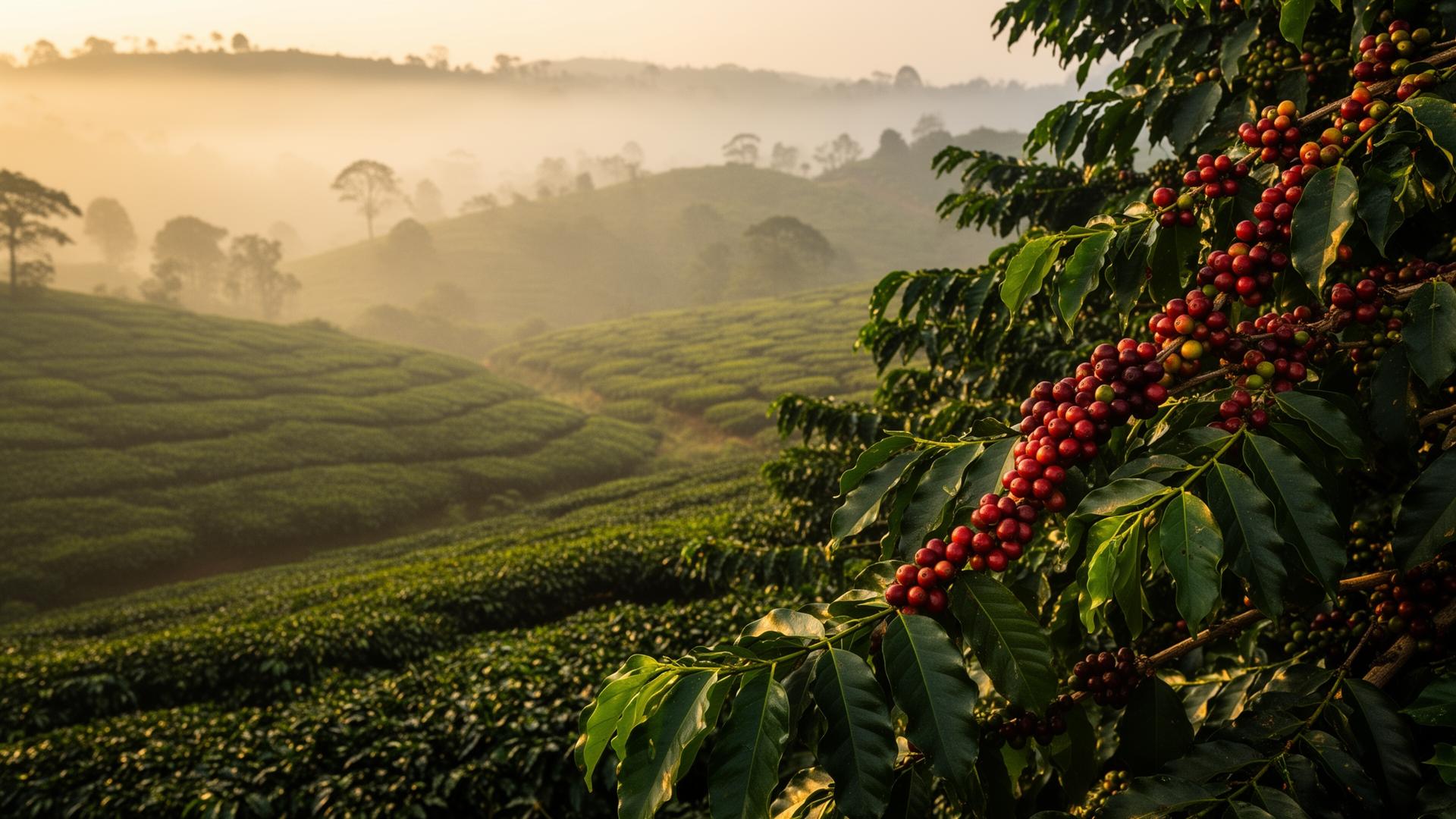
Coorg is another name for Kodagu district in Karnataka, southern India. Coffee is grown across its five taluks: Madikeri, Somwarpet, Kushalnagar, Virajpet and Ponnampet. A regional name provides a starting point for understanding an origin; a useful offer also identifies the producer and the particular coffee being supplied.
Arabica and Robusta across the district
Both species are grown in Kodagu. The district Coffee Board table records 79,881 hectares of Robusta and 27,040 hectares of Arabica.
About 75%
Robusta's share of the planted coffee area in the published district table.
About 89%
The share of the district's Arabica area recorded in the combined Somwarpet–Kushalnagar group.
Calculated from the Coffee Board's planted-area table on the Kodagu district website. These figures describe that published table, not a current-season production forecast.
For a buyer, the species and the location within Kodagu are useful details to request together.
Growing conditions and shade
The Coffee Board describes Coorg's coffee-growing tract at 750–1,100 metres above sea level. Its regional profile lists Arabica selections including S.795, Selection 6, Selection 9 and Cauvery, and Robusta selections S.274 and CxR.
Mixed shade and intercrops are part of the regional farming landscape. Pepper, cardamom, orange, banana and arecanut appear in the Board's Coorg profile. Shade trees can protect soil and moderate temperature. These regional descriptions should be checked against the records for an individual farm.
Understanding the Coorg Arabica GI
Coorg Arabica Coffee is a registered Geographical Indication. The official registry lists application 604 and certificate 331, dated 1 March 2019, with the Coffee Board as applicant.
The protected name specifically identifies Arabica. Any GI claim on a commercial offer should be supported by the applicable documentation. Origin information also needs to be read alongside the lot specification and its evaluation.
What to check in a green coffee offer
Use the regional background to ask for specific information:
- Identity
- Producer or estate, location, species and variety where known.
- Harvest and processing
- Crop year, harvest period and the stated processing method.
- Physical specification
- Grading basis, screen size, defects, moisture and any available water-activity result.
- Evaluation and documentation
- Sample assessment, lot records and the documents supporting any certification claim.
These checks help connect an origin story to the coffee being evaluated.
Frequently asked questions
Are Coorg and Kodagu the same place?
Yes. Coorg is another name for Kodagu district in Karnataka, India.
Is all Coorg coffee Arabica?
Both Arabica and Robusta grow in the district. The published Coffee Board planted-area table shows a larger Robusta area.
Does a Coorg label establish a lot's GI status?
The registered name is Coorg Arabica Coffee. For a specific offer, check the documentation supporting use of that name.
Sources and further reading
Regional information reviewed on 17 November 2026.
- Coffee Board of India — Coffee regions and growing conditions.
- Kodagu District / Coffee Board — District planted-area table.
- Intellectual Property India — Coorg Arabica Coffee registration.
- Indian Coffee Beans — Further reading on the Coorg coffee region.
This guide describes the region. Specifications and supporting documents are assessed for each coffee offer.